 Florida Boys Paving
Good Water Flow Helps Your Driveway Last Longer and Stay Safer
Proper drainage protects an asphalt driveway by moving water away before it can soak into weak spots, wash out the base, or freeze and expand. When water sits on the surface or along the edges, damage can start fast. Small puddles can turn into cracks, dips, and soft areas over time. In places like Melbourne, FL, good drainage can help asphalt driveway paving hold up better through rain, snow, and daily use.
Why Prevention Matters
Water is one of the biggest threats to any paved surface. An asphalt driveway may look solid, but it still needs support under it. If water gets under the pavement, the base can soften and shift. That movement often leads to cracks, low spots, and edge damage. Good drainage helps keep the surface dry and the ground below more stable. That is a big part of long-lasting asphalt driveway paving and general surface care in the service category keyword field.
Early Warning Signs
Many drainage problems show up before major damage happens. Spotting them early can help stop larger repairs later. A driveway does not need a huge hole to have a water issue. Even small signs can point to poor runoff.
- Puddles that stay for hours after rain
- Water running toward the garage or home
- Cracks that keep growing
- Sunken spots where tires often pass
- Loose or broken edges
- Soil washing away near the sides
- Ice forming in the same spots each winter
If one or more of these signs appear, the driveway may not be draining the right way. It is smart to act early before the problem spreads.
Seasonal or Routine Checklist
Drainage needs regular attention through the year. A simple routine can help protect the surface and the base below it. Homeowners can start with a few easy checks after storms and during season changes.
- Walk the driveway after rain and look for standing water.
- Check where the water flows at the bottom of the slope.
- Clear leaves, dirt, and mulch from drain paths.
- Look at the edges for erosion or sinking soil.
- Inspect cracks and seal them before water gets deeper.
- Watch for gutter downspouts dumping water onto the pavement.
- Check for ice patches in winter that may mark low areas.
This kind of routine can help extend the life of asphalt driveway paving. It also helps catch trouble before heavy weather makes it worse.
Best Practices for Long-Term Results
The best drainage plan starts with the right slope. A driveway should guide water away from the home and off the paved surface. Even a gentle pitch can make a big difference. Water should not settle in the middle or along the sides.
Another smart step is managing roof runoff. Gutters and downspouts should send water away from the driveway. If they dump water right onto the pavement, the surface and the base can wear down much faster. In some cases, a trench drain, catch basin, or swale may help handle runoff from larger areas.
Strong edges also matter. When the sides of a driveway are weak or unsupported, water can wash out the soil nearby. That can cause crumbling, cracks, and broken corners. Proper grading next to the driveway helps water move away instead of cutting into the sides.
Sealcoating and crack sealing can also help. These steps do not fix bad grading, but they add a layer of defense. They help limit how much water gets into the surface while larger drainage issues are being addressed.
What Not to Do
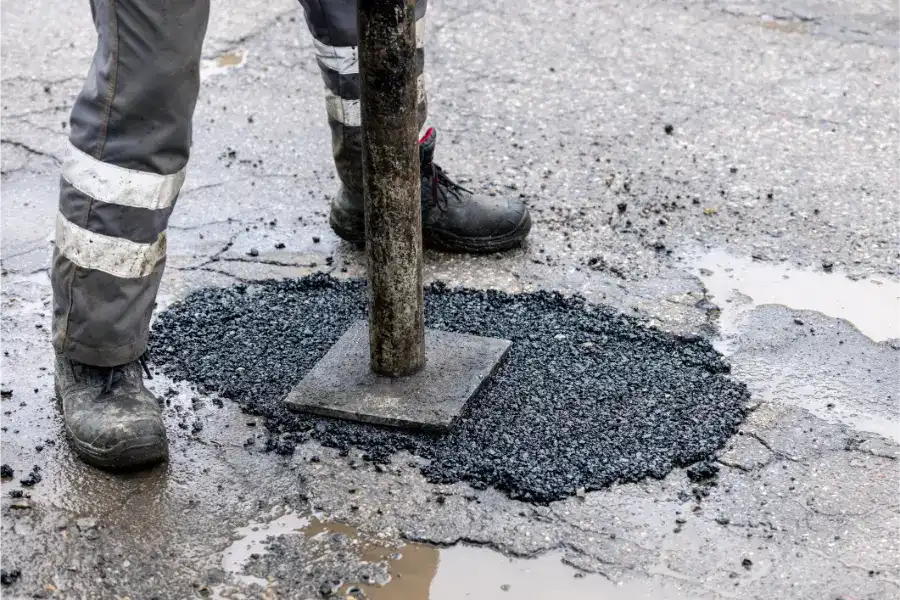
Some quick fixes can make drainage problems worse. One common mistake is filling puddles with random patch material without fixing the slope below. That may hide the issue for a short time, but water often returns to the same spot.
Another mistake is letting landscaping block runoff. Flower beds, piled mulch, or raised lawn edges can trap water on the pavement. It is also a bad idea to direct sump pump lines or downspouts onto the driveway. That adds more water exactly where it should not go.
People also sometimes ignore small cracks. Water uses those openings to reach the base. Once that happens, traffic and weather can turn a simple fix into a larger repair. With asphalt driveway paving, small issues rarely stay small when water is involved.
When to Schedule Professional Help
Some drainage checks are easy, but deeper problems often need a trained eye. If puddles keep returning, if the driveway is sinking, or if water is moving toward the garage, it may be time for professional help. The same is true if the edges are falling apart or if cracks keep reopening after patching.
A paving professional can check the grade, inspect the base, and find the source of the water problem. In some cases, the fix may be simple, like adjusting drainage paths or sealing cracks. In other cases, the surface may need to be regraded or sections may need replacement. Getting clear answers early can help protect the driveway and avoid bigger damage later.
Final Recommendation
If you have drainage problems around your driveway in Melbourne, FL, contact us for a closer look. At Florida Boys Paving, we help property owners spot water issues early and protect their asphalt surfaces for the long run. Call us at (321) 241-3996 to talk with our team about better drainage, repairs, or new asphalt driveway paving.